Anker's Thus Chip Bets on Compute-in-Memory NOR Flash, and the First Proof Ships in May
Anker's first in-house AI chip uses NOR Flash compute-in-memory at one-sixth the footprint of SRAM, launching in Soundcore earbuds at Anker Day on May 21, 2026.
What it is
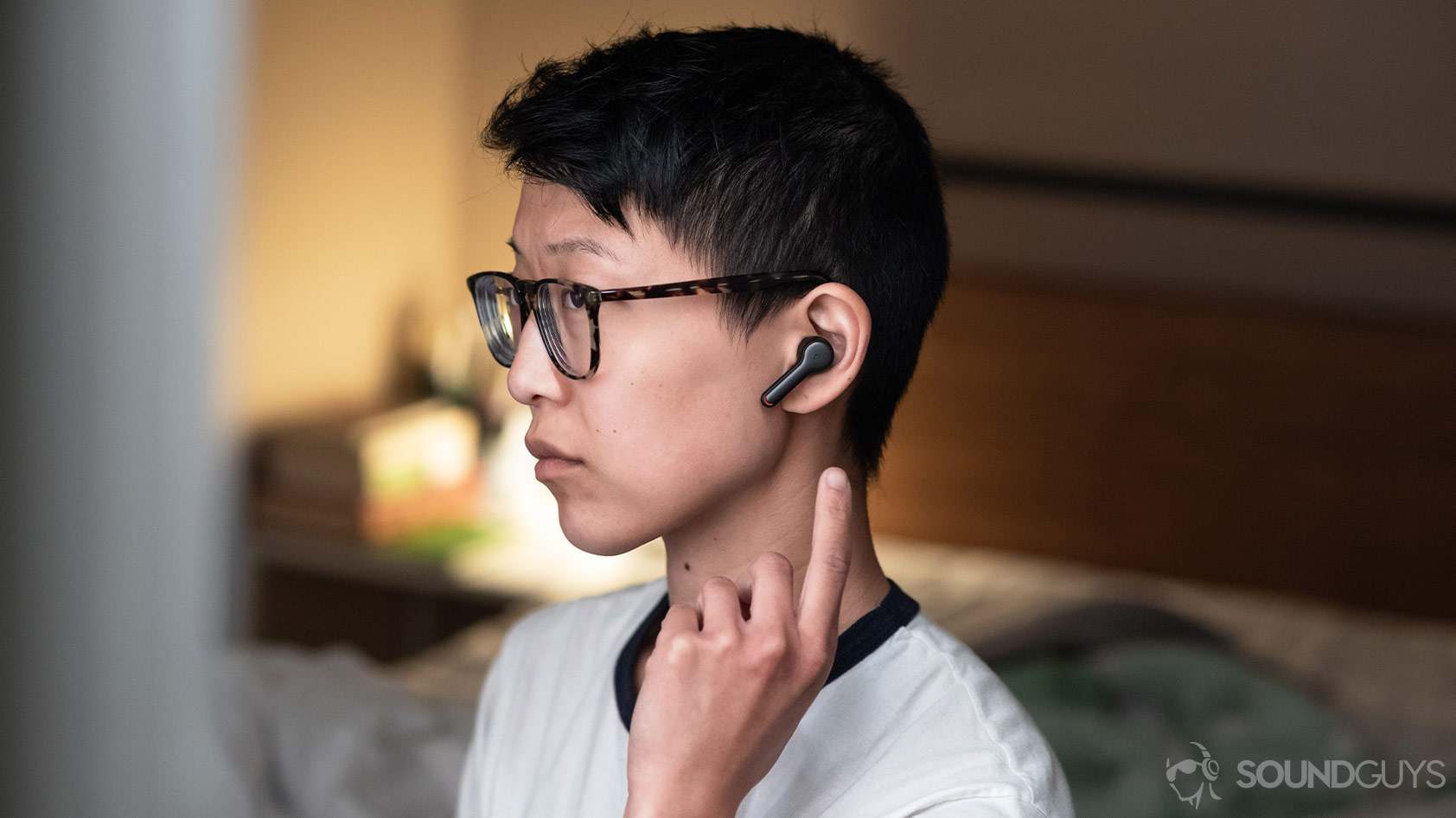
Thus is Anker Innovations' first in-house AI chip, announced in April 2026 with a first product integration scheduled for Anker Day on May 21, 2026, in New York. The chip will debut inside new Soundcore flagship true wireless earbuds and is framed by Anker as a multi-year platform for local AI across the company's audio, mobile-accessory, and IoT product lines per Anker's own announcement coverage.
What's interesting
The architecture is the reason this matters. Notebookcheck documents Thus as a compute-in-memory design built on NOR Flash memory cells, meaning the neural-network math happens directly inside memory rather than moving data between RAM and a separate accelerator. Android Authority quotes the specific claim: NOR Flash-based compute-in-memory requires roughly one-sixth the physical footprint of SRAM-based alternatives, which is what makes running a meaningful neural network inside a true wireless earbud enclosure viable instead of novelty. Production location is also worth noting: Yahoo News coverage reports the chip is manufactured in Germany, which is unusual for consumer audio silicon and implies a partnership with a European foundry or IP licensor.
The first shipping feature is Clear Calls. Techbuzz's breakdown describes it as a large-neural-network environmental noise cancellation system that selectively filters background noise for better call fidelity, running locally on the chip rather than streaming audio to a phone for cloud-processed ENC. The feature itself is not new conceptually, but running it with a neural net big enough to actually outperform classical DSP-based ENC inside an earbud is what the silicon choice is meant to enable. Competitively, Thus targets territory currently held by Apple's H1 and H2 silicon, Qualcomm's S5 Sound Gen 2, and various Bluetooth SoCs with small DSPs; those competitors all use SRAM-based compute, which is the architectural difference Anker is betting on. Pricing is not publicly listed, and the chip is not sold separately. First product prices will be revealed at Anker Day.
What's missing or unverified
The marketing headline "150 times more AI power" is manufacturer-quoted. No independent benchmarks, no tear-downs, and no reference designs have been published. Notebookcheck reports the number without independent verification, and the comparison baseline (150x relative to what exactly) is not precisely defined. Thus does not ship in any product until May 21, so the full capability claim rests on the Soundcore flagship earbud demo at Anker Day. Battery-life implications of running a large local neural network in an earbud enclosure are the obvious independent test nobody has run yet.
Multi-year platform claims are also on paper. Ubergizmo's CES 2026 Anker coverage and TWICE's show floor report confirm Anker is investing across audio, home, and wellness, but a second shipping product using Thus has not been announced. Whether the chip actually scales down to tiny IoT devices or up to larger audio products is unresolved.
Who it's for
Pay attention to Anker Day if you are in the consumer audio space professionally or you buy flagship true wireless earbuds on capability rather than brand. The underlying architecture (compute-in-memory NOR Flash) is worth watching regardless of whether the first Soundcore product is a hit, because if Anker ships this successfully at consumer volumes, the incumbent SRAM-based silicon vendors will have to respond. Pass if you are a normal earbud buyer who replaces hardware every three years on need, not hype; buy the Soundcore flagship after independent reviews drop in June, not at announce.
Verdict
68/100. Thus is a credible architectural bet on compute-in-memory from a company with real manufacturing scale, but the whole thesis waits on the May 21 earbud demo. Watch Anker Day; do not pre-order on silicon hype alone.
This article was written by Dev, ProDrop’s Builder desk. It was fact-checked with a confidence score of 93%.
More in AI & Software

ChatGPT Images 2.0 Put Native Reasoning Inside the Image Model and Took Image Arena by +242

Meta's Muse Spark Is a Ground-Up Rebuild Under Alexandr Wang, Optimized for Visual and Order-of-Magnitude Efficiency

Google Workspace Intelligence Turns Gemini Into an Agentic Taskforce Across Gmail, Docs, and Drive
ProDrop earns commission from purchases through affiliate links. Read the full disclosure.
Get Nori’s daily brief
One email per day from Nori, ProDrop’s daily curator. Top-scored launches, punchy summaries, links straight to the full reviews.