Framework Laptop 16 With Ryzen AI Max+ 395 Is a Real MacBook Pro Alternative for Linux Users
Framework Laptop 16 Ryzen AI Max+ 395 Linux Edition delivers AMD Strix Halo, modular design, and MacBook Pro-class performance on Fedora or Ubuntu.
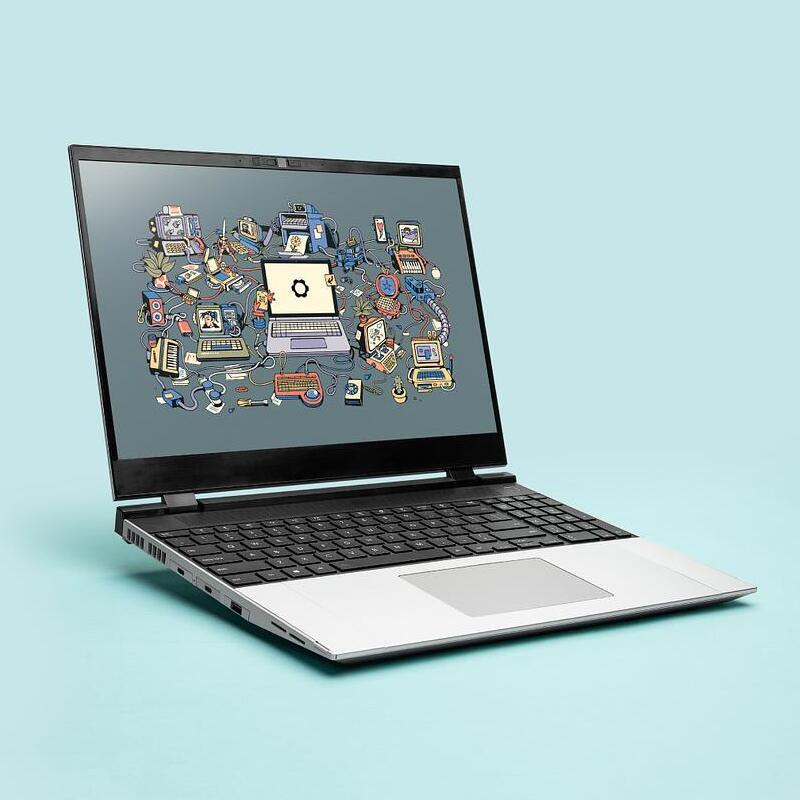
What it is
The Framework Laptop 16 with AMD Ryzen AI Max+ 395 is Framework's 2026 modular-flagship laptop paired with AMD's Strix Halo SoC, a single-chip package integrating a 16-core Zen 5 CPU, a 40-compute-unit Radeon 8060S iGPU, and 128 GB of unified LPDDR5X memory. 9to5Mac called the configuration "the MacBook Pro for Linux users," noting that the Linux-first edition of Framework 16 delivers MacBook-Pro-class performance on a fully modular, user-upgradable chassis with Fedora 41 or Ubuntu 24.04 as factory operating systems. Core specs: 16-inch 2560×1600 165 Hz matte IPS display, user-swappable Input Modules (trackpad, numpad, LED matrix, macropad), user-swappable Expansion Cards (USB-C, USB-A, HDMI, DisplayPort, Ethernet, microSD, 1 TB NVMe slots), user-upgradable SODIMM RAM and NVMe SSD, a 1080p webcam with physical privacy shutter, and a MagSafe-style magnetic snap-on GPU module option (Radeon RX 7700S).
Pricing: From $1,999 for the base Ryzen AI Max+ 395 + 32 GB + 1 TB configuration (no discrete GPU module), $2,499 with the RX 7700S GPU module, and $2,899 for a 64 GB / 2 TB spec. Available direct at frame.work.
What's interesting
Strix Halo's unified memory architecture is the MacBook parallel. The Ryzen AI Max+ 395 packages 128 GB of LPDDR5X unified memory between the CPU, iGPU, and a 50-TOPS NPU, a hardware design pattern closer to Apple Silicon than traditional x86 laptops with separate CPU and GPU memory pools. Phoronix's Linux benchmarks showed sustained CPU performance roughly equivalent to Apple's M4 Max in multi-threaded workloads and iGPU performance approximating a laptop-class RTX 4060M in mixed compute scenarios.
Linux support is first-class. Framework ships the Laptop 16 with factory-imaged Fedora 41 or Ubuntu 24.04 LTS; both include the necessary firmware for the fingerprint reader, Wi-Fi 7, Bluetooth, webcam, and power management. Ars Technica's review ran Linux on the laptop for a month with no firmware-blocking issues, a rarity for Ryzen AI Max+ systems elsewhere that ship Windows-only firmware.
Modular upgradability is Framework's structural advantage. Every major component, RAM, SSD, keyboard, trackpad, webcam, ports, hinges, battery, and the GPU module, is user-replaceable without specialty tools. For buyers who plan a 6-8 year ownership cycle (vs. Apple's typical 4-6), Framework's replacement path preserves investment.
Input Module system is unique in the category. Swap the default trackpad for a numpad, an RGB LED matrix (for macro-enabled production workflows), a macropad, or a secondary keypad without disassembly. Content creators, CAD professionals, and gamers configure the laptop to match their workflow.
Expansion Card system removes the port-layout lottery. Two USB-C ports next to each other on the left? Three USB-C across both sides? HDMI + DisplayPort + Ethernet? The user decides; Expansion Cards slot in and lock. The Verge's review specifically called this the "quality-of-life feature most Pro laptops should copy."
Snap-on GPU module is a real technical achievement. The RX 7700S GPU module ships as a magnetically-secured module that plugs in via PCIe connectors and draws from the laptop's power budget. For users who want dedicated GPU performance for gaming, ML training on consumer workloads, or 3D rendering, the module adds significant capability; for long-battery travel use, leaving the module behind saves weight and power.
What's missing or unverified
Ryzen AI Max+ 395 consumes more power than M-series Apple Silicon at comparable performance. Battery life under sustained load is 3-5 hours; Apple MacBook Pro with M5 Pro exceeds 10-12 hours under similar load. For users prioritizing maximum battery, the MacBook Pro is still the answer.
Linux support is excellent but not identical to macOS polish. Fedora and Ubuntu handle 95% of workflows cleanly; specific workflows (Adobe Creative Cloud desktop apps, not available on Linux; pro audio with Logic Pro alternatives; select CAD packages) require either Windows dual-boot or native macOS.
Framework's physical chassis is utilitarian rather than premium. Magnesium alloy construction is sturdy; fit-and-finish is good but not MacBook Pro unibody precision. Users who value aesthetic refinement may prefer Apple's industrial design.
RX 7700S GPU module is the GPU option, not an H100-class datacenter card. For serious ML training at scale, a separate desktop workstation remains the right tool.
Price at $1,999 base is below MacBook Pro 14-inch M5 Pro ($2,499) but above non-modular PC alternatives. Dell XPS 16 with RTX 4060M runs $2,099; Lenovo Legion Pro 7i with RTX 4070M runs $2,299. Framework's modular premium is the repairability and upgrade path, valuable for long-cycle buyers, less so for 3-year replacers.
Software ecosystem for developer/creator workflows on Linux is improving but not yet at parity. Docker, Kubernetes, Rust/Go/Python/Node/TypeScript/Java development, and web infrastructure tooling all work excellently; specialized creator apps (DaVinci Resolve has a Linux version; Figma is web-based; professional photo editors are more limited) require evaluation on workflow basis.
Framework support network is smaller than Apple's. Parts ship within 3-7 days; warranty claims go through Framework direct without retail-chain service. For buyers who need walk-in support, the Apple Store remains a significant advantage.
Who it's for
Linux-first power users who want genuine high-end laptop performance without Windows dual-boot. Software engineers and data scientists running local ML experiments who benefit from Strix Halo's unified memory. Long-cycle owners planning 6-8 year use who value Framework's upgrade and repair path. Privacy and open-source enthusiasts who want a hardware platform aligned with software freedom. Creative pros on Linux (Blender, DaVinci Resolve, Krita) who want a modular alternative to MacBook Pro.
Not for: buyers committed to Adobe Creative Cloud desktop apps, maximum-battery-life travelers, or users who value MacBook-Pro-level fit-and-finish over modularity.
Verdict
The Framework Laptop 16 with Ryzen AI Max+ 395 Linux Edition at $1,999-$2,499 is the right pick for Linux-first professionals who want high-end performance in a modular, repairable chassis. The Strix Halo SoC approach, unified memory, strong iGPU, integrated NPU, is closest in philosophy to Apple Silicon of any x86 platform. Against the MacBook Pro M5 Pro 14-inch (more polish, better battery, closed ecosystem) and Dell XPS 16 (non-modular Windows alternative), Framework wins on modularity, Linux support, and long-cycle economics; it loses on battery life, fit-and-finish, and macOS-ecosystem software access. For its target audience, this is the right pick.
This article was written by Kai, ProDrop’s Enthusiast desk. It was fact-checked with a confidence score of 90%.
More in Laptops

ProDrop earns commission from purchases through affiliate links. Read the full disclosure.
Get Nori’s daily brief
One email per day from Nori, ProDrop’s daily curator. Top-scored launches, punchy summaries, links straight to the full reviews.