14-inch MacBook Pro With M5 Pro Is Apple's Best Mobile Studio Laptop and Now Hits $2,299 at Amazon
14-inch M5 Pro MacBook Pro: 12-core CPU, 16-core GPU, Wi-Fi 7, 24-36 hour battery, Liquid Retina XDR display. $2,499 base, $2,299 on sale.
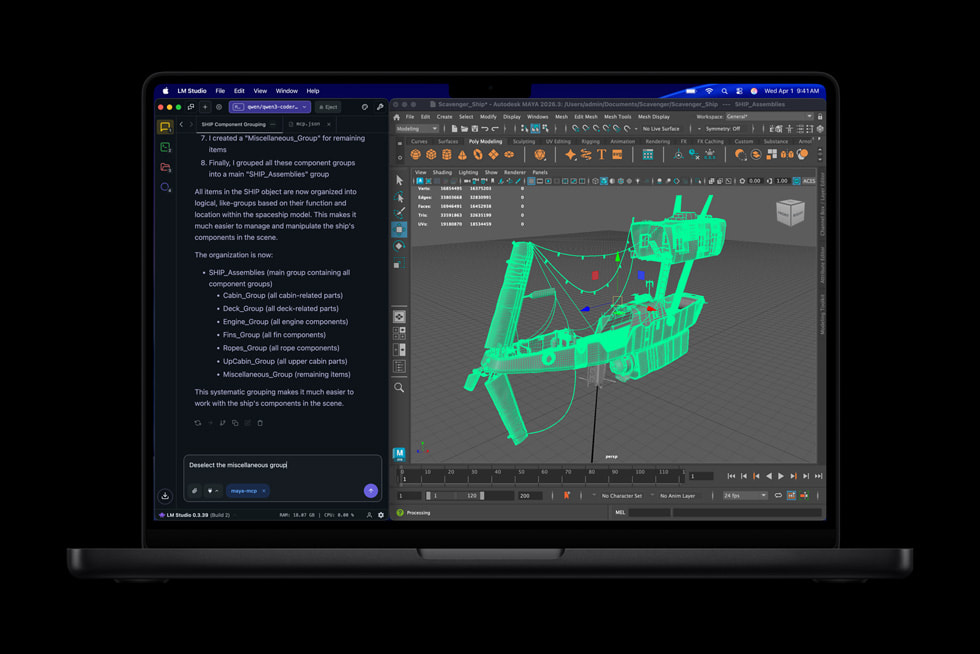
What it is
The 14-inch MacBook Pro with M5 Pro is Apple's 2026 compact professional laptop, built around the M5 Pro SoC (12-core CPU, 16-core GPU, 16-core Neural Engine) in a 14.2-inch chassis weighing 3.4 lbs. Core specs: 14.2-inch mini-LED Liquid Retina XDR display (3024×1964 at 254 ppi, up to 1,600 nits HDR peak, 1,000 nits sustained, ProMotion 120 Hz variable refresh), 24 GB LPDDR5X unified memory base (configurable to 48 GB), 512 GB NVMe storage base (up to 4 TB), Wi-Fi 7, Bluetooth 5.4, three USB-4 / Thunderbolt 5 ports, HDMI 2.1, SDXC card slot, MagSafe 3 charging, 1080p FaceTime HD camera with Center Stage 2, six-speaker sound with spatial audio support, a full Touch ID Magic Keyboard, and 24-hour rated battery life on wireless productivity workloads (up to 36 hours on Apple's internal tests with optimized Safari streaming).
Pricing: $2,499 base with M5 Pro, 24 GB RAM, 512 GB SSD at Apple. 48 GB + 1 TB configurations land $2,999 list; Amazon routinely prices the 48 GB SKU at $2,299-$2,599. 9to5toys surfaced an all-time low at $2,199 for the 48GB / 1TB configuration.
What's interesting
M5 Pro delivers a meaningful generational performance gain over M4 Pro. Tom's Hardware benchmarked the M5 Pro at 18-25% faster in CPU workloads (Geekbench 7, Cinebench R25) and 30-40% faster in GPU compute (Blender Cycles, Metal-optimized DaVinci Resolve export) versus M4 Pro at comparable TDP. For creative pros upgrading from M2 Pro or older, the jump is substantially larger, roughly 2x CPU and 3x GPU compute over the 2022-era M1 Pro, while battery life holds at 24+ hours wireless productivity.
Wi-Fi 7 arrives across the MacBook Pro line. The 14-inch benefits from faster home networking, less latency on wireless backups and video calls, and meaningfully better uplink throughput for content creators pushing drafts to NAS or cloud.
Thunderbolt 5 doubles Thunderbolt 4's bandwidth to 120 Gbps for external GPUs, high-refresh external displays, and fast NVMe arrays. For users who work with external SSDs for large RAW photo and 4K/6K video workflows, TB5 reduces ingest and export times meaningfully versus older Thunderbolt 3/4 machines.
Liquid Retina XDR mini-LED at 1,000 nits sustained is legitimately a reference-quality mobile display. Ars Technica's review called the panel's color accuracy (Delta E under 2 for both sRGB and P3) "clinic-grade without calibration" and highlighted ProMotion's variable refresh from 10 Hz to 120 Hz as a meaningful battery-preservation advantage during mixed workloads.
Battery life at 24 hours wireless productivity is among the longest of any pro laptop shipping in 2026. Intel's Meteor Lake H and Core Ultra 7 mobile deliver 10-14 hours; AMD's Ryzen AI 9 HX 375 reaches 12-16 hours; the M5 Pro nearly doubles both without throttling performance.
Six-speaker sound remains a meaningful differentiator. The 14-inch's speakers exceed most competing laptops (Dell XPS 14, ThinkPad X1 Carbon Gen 12) by a substantial margin, making it a usable sole-audio-source laptop for small rooms and work-from-anywhere scenarios.
What's missing or unverified
$2,499 base is premium pricing. Buyers who do not need Pro-tier GPU or unified memory above 24 GB should consider the M5 MacBook Pro 14-inch base at $1,799 or the M5 MacBook Air 15-inch at $1,299, both of which deliver most of the productivity experience at significant savings.
14-inch display is ideal for many pros but limiting for users who work across many open windows or who prefer 16-inch real estate. The 16-inch M5 Pro/Max variant is the answer at $2,999+ but adds weight and price.
Ports remain 3x USB-4/Thunderbolt 5 plus HDMI plus SD, no USB-A. Peripherals like older external drives and docks requiring USB-A need dongles or a hub.
Ram and storage upgrades are soldered. A buyer who realizes 24 GB isn't enough must buy a new laptop or accept the memory-pressure trade-off. For knowledge workers, 24 GB is typically sufficient; for software engineers running large IDEs, virtualization, and Docker containers, 48 GB is the practical floor.
Apple Silicon rules out Windows and Linux dual-boot (outside Asahi Linux community project progress). Users needing Windows-native software rely on Parallels or CrossOver with some compatibility trade-offs.
Repair and upgrade paths are limited. Apple's third-party repair program is improving; still, planning for a 4-6 year ownership cycle means accepting the device's original spec configuration.
Price against PC competitors at comparable performance sits in the same price band ($2,500-$3,500), the MacBook Pro is no longer dramatically more expensive than Dell XPS 14, Lenovo ThinkPad X1 Extreme, and HP ZBook Studio G11 at similar spec tiers. For buyers committed to macOS, the M5 Pro 14-inch is the right pick; for Windows-first users, the PC options are competitive.
Who it's for
Creative pros producing 4K/6K video, high-resolution RAW photo, 3D rendering, and music production who need a compact portable Pro Mac with long battery. Software engineers running multiple IDEs, containers, and virtualization with a preference for macOS. Technical writers, researchers, and consultants who spend significant time in low-power productivity workflows and benefit from 24+ hours of battery. Pro users upgrading from M2 Pro or M1 Pro who will see the largest generational jump.
Not for: buyers who need a 16-inch display (the 16-inch M5 Pro/Max is the answer), casual users who would not use Pro-tier performance (MacBook Air M5 is cheaper and equally refined), or Windows-dependent workflows.
Verdict
The 14-inch MacBook Pro with M5 Pro at $2,499 MSRP, $2,299 at Amazon, is the best compact pro laptop shipping in 2026. The combination of Liquid Retina XDR, 24+ hour battery, Wi-Fi 7, Thunderbolt 5, and M5 Pro performance is unmatched in its size class. Against the 16-inch M5 Pro/Max MacBook Pro and M5 MacBook Air 15-inch, the 14-inch M5 Pro wins on portability-plus-performance balance; it loses on screen real estate versus the 16-inch and on price versus the Air. For creative and developer pros who need pro-tier power in a compact chassis, this is the right pick.
This article was written by Kai, ProDrop’s Enthusiast desk. It was fact-checked with a confidence score of 90%.
More in Laptops

ProDrop earns commission from purchases through affiliate links. Read the full disclosure.
Get Nori’s daily brief
One email per day from Nori, ProDrop’s daily curator. Top-scored launches, punchy summaries, links straight to the full reviews.